


Stevioside STV40 is a natural sweetener that has gained significant attention in the food and beverage industry due to its high sweetness and low-calorie properties. As a supplier of Stevioside STV40, I am often asked about its chemical structure. In this blog post, I will delve into the chemical structure of Stevioside STV40, its properties, and its applications in various industries.
Chemical Structure of Stevioside STV40
Stevioside STV40 belongs to the class of steviol glycosides, which are natural compounds extracted from the leaves of the Stevia rebaudiana Bertoni plant. The main component of Stevioside STV40 is stevioside, which has a complex chemical structure.
Stevioside is a diterpene glycoside, and its basic structure consists of a steviol aglycone backbone. The steviol aglycone is a diterpene molecule with a characteristic tetracyclic structure. It has a carboxyl group at the C - 13 position and a hydroxyl group at the C - 19 position.
In stevioside, the hydroxyl group at the C - 13 position of the steviol aglycone is glycosylated with a glucose molecule through a β - glycosidic bond. Additionally, a disaccharide composed of two glucose molecules is attached to the C - 19 carboxyl group via an ester linkage.
The chemical formula of stevioside is C₃₈H₆₀O₁₈, and its molecular weight is approximately 804.87 g/mol. The specific arrangement of the sugar moieties around the steviol aglycone is crucial for its sweet taste. The presence of these sugar residues not only affects the solubility and stability of stevioside but also contributes to its interaction with taste receptors on the tongue, resulting in a sweet sensation.
Properties of Stevioside STV40
Sweetness
Stevioside STV40 is extremely sweet. It is about 200 - 300 times sweeter than sucrose (table sugar) on a weight - for - weight basis. This high sweetness intensity allows for the use of very small amounts of Stevioside STV40 to achieve the same level of sweetness as a much larger quantity of sugar.
Low - Calorie
One of the most significant advantages of Stevioside STV40 is its low - calorie nature. Since it is a natural sweetener derived from plants, it contains negligible calories. This makes it an ideal alternative for people who are looking to reduce their calorie intake, such as those with diabetes or those trying to manage their weight.
Stability
Stevioside STV40 has good stability under a wide range of pH and temperature conditions. It can withstand the processing conditions commonly used in the food and beverage industry, such as high - temperature sterilization and acidic or alkaline environments. This stability ensures that it retains its sweetening properties during the manufacturing and storage of products.

Solubility
Stevioside STV40 is soluble in water to a certain extent. Its solubility is influenced by factors such as temperature and pH. Generally, its solubility increases with increasing temperature. In aqueous solutions, it can form clear and stable solutions, which is beneficial for its application in liquid - based products.
Applications of Stevioside STV40
Food Industry
In the food industry, Stevioside STV40 is widely used as a sweetener in a variety of products. It can be found in baked goods, such as cakes and cookies, where it can replace a portion or all of the sugar. This not only reduces the calorie content of the products but also provides a natural alternative to artificial sweeteners.
It is also used in dairy products, such as yogurt and ice cream. The high sweetness of Stevioside STV40 allows for a reduction in the amount of sugar added, while still maintaining the desired level of sweetness. Additionally, it can enhance the flavor profile of these products and improve their shelf - life due to its stability.
Beverage Industry
The beverage industry is one of the largest consumers of Stevioside STV40. It is used in soft drinks, energy drinks, and fruit juices. By replacing sugar with Stevioside STV40, beverage manufacturers can produce low - calorie or zero - calorie drinks without sacrificing taste. This is particularly appealing to health - conscious consumers who are looking for sugar - free alternatives.
Pharmaceutical Industry
In the pharmaceutical industry, Stevioside STV40 can be used as a sweetening agent in oral medications. It can mask the bitter taste of some drugs, making them more palatable for patients. Moreover, its low - calorie and natural properties make it a suitable choice for pharmaceutical formulations.
Comparison with Other Stevioside Products
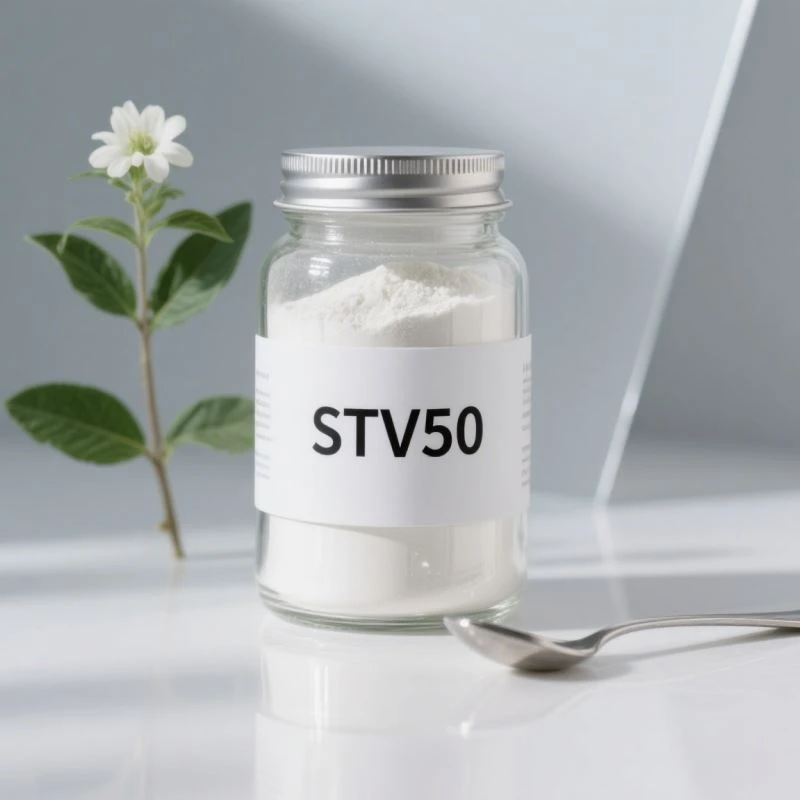
We also supply other stevioside products, such as Stevioside STV80, Stevioside (STV) 70, and Stevioside STV50. The numbers in these product names represent the purity level of stevioside in the product.
Stevioside STV80 has a higher purity of stevioside compared to Stevioside STV40. This means that it is even sweeter and may have a more refined taste. However, it is also more expensive. Stevioside STV70 and Stevioside STV50 have intermediate purity levels between STV40 and STV80.
The choice of which stevioside product to use depends on various factors, such as the specific application, cost - effectiveness, and the desired level of sweetness. For some applications where cost is a major concern and a moderate level of sweetness is sufficient, Stevioside STV40 may be the most suitable option.
Contact for Purchase and Negotiation
If you are interested in purchasing Stevioside STV40 or would like to discuss your specific requirements, please feel free to contact us. We are committed to providing high - quality products and excellent customer service. Our team of experts can assist you in choosing the right stevioside product for your needs and can offer competitive pricing and flexible delivery options.
References
- Kinghorn, A. D., & Soejarto, D. D. (1985). Stevioside and related sweet diterpene glycosides from Stevia rebaudiana. In Recent Advances in Phytochemistry (Vol. 19, pp. 281 - 313).
- Geuns, J. - M. C. (2003). Stevia rebaudiana Bertoni, source of a high - potency natural sweetener: A comprehensive review. Phytochemistry Reviews, 2(4), 339 - 375.
- Prakash, I., DuBois, G. E., Clos, J. F., & Wilkens, K. L. (2008). Steviol glycosides: Chemical and technological aspects. In Stevia: The Genus Stevia (pp. 119 - 142). CRC Press.


