


Stevioside STV60 is a remarkable sweetener that has gained significant attention in the food and beverage industry. As a supplier of Stevioside STV60, I am excited to delve into its unique sweetness characteristics and explore why it has become a popular choice for many manufacturers.
1. Introduction to Stevioside STV60
Stevioside is a natural sweetener extracted from the leaves of the Stevia rebaudiana plant. Stevioside STV60 refers to a specific grade of stevioside where the stevioside content is 60%. This grade strikes a balance between cost - effectiveness and sweetness quality, making it an attractive option for various applications.
2. Sweetness Intensity
One of the most notable features of Stevioside STV60 is its high sweetness intensity. Compared to sucrose (table sugar), Stevioside STV60 is approximately 200 - 300 times sweeter. This means that only a tiny amount of Stevioside STV60 is needed to achieve the same level of sweetness as a much larger quantity of sugar. For example, in a beverage formulation, a few milligrams of Stevioside STV60 can replace several grams of sugar, resulting in a significant reduction in calorie content.
This high sweetness intensity offers several advantages for food and beverage manufacturers. Firstly, it allows for the production of low - calorie or sugar - free products without sacrificing taste. Consumers who are health - conscious or have dietary restrictions, such as those with diabetes, can enjoy sweet - tasting products without the negative effects of excessive sugar consumption. Secondly, it can lead to cost savings in the long run, as less sweetener is required to achieve the desired sweetness level.
3. Sweetness Profile
The sweetness profile of Stevioside STV60 is complex and distinct from that of sugar. While it provides an initial burst of sweetness similar to sugar, it also has some unique after - taste characteristics.
- Initial Sweetness: The onset of sweetness of Stevioside STV60 is relatively fast, similar to that of sugar. This is important in applications where a quick perception of sweetness is desired, such as in carbonated beverages. When a consumer takes a sip of a beverage sweetened with Stevioside STV60, they immediately experience a sweet sensation on their taste buds.
- After - taste: However, Stevioside STV60 may have a slight licorice - like or bitter after - taste, especially at higher concentrations. This after - taste is more noticeable in some individuals than in others. The intensity and nature of the after - taste can be influenced by factors such as the food or beverage matrix, the pH level, and the presence of other ingredients. For example, in acidic beverages, the after - taste may be less pronounced compared to neutral or alkaline ones.
Manufacturers often use various techniques to mitigate the after - taste of Stevioside STV60. One common approach is to blend it with other sweeteners, such as erythritol or monk fruit extract. These blends can help to mask the after - taste and create a more balanced sweetness profile. Another method is to optimize the formulation by adjusting the pH, adding flavor enhancers, or using specific processing techniques.
4. Comparison with Other Stevioside Grades
Stevioside comes in different grades, such as Stevioside STV40, Stevioside STV50, and Stevioside STV80. Each grade has its own sweetness characteristics.
- Stevioside STV40: This grade has a lower stevioside content (40%) compared to Stevioside STV60. As a result, its sweetness intensity is relatively lower, and it may have a more pronounced after - taste. However, it is often more cost - effective, making it suitable for applications where cost is a major consideration and a less intense sweetness is acceptable.
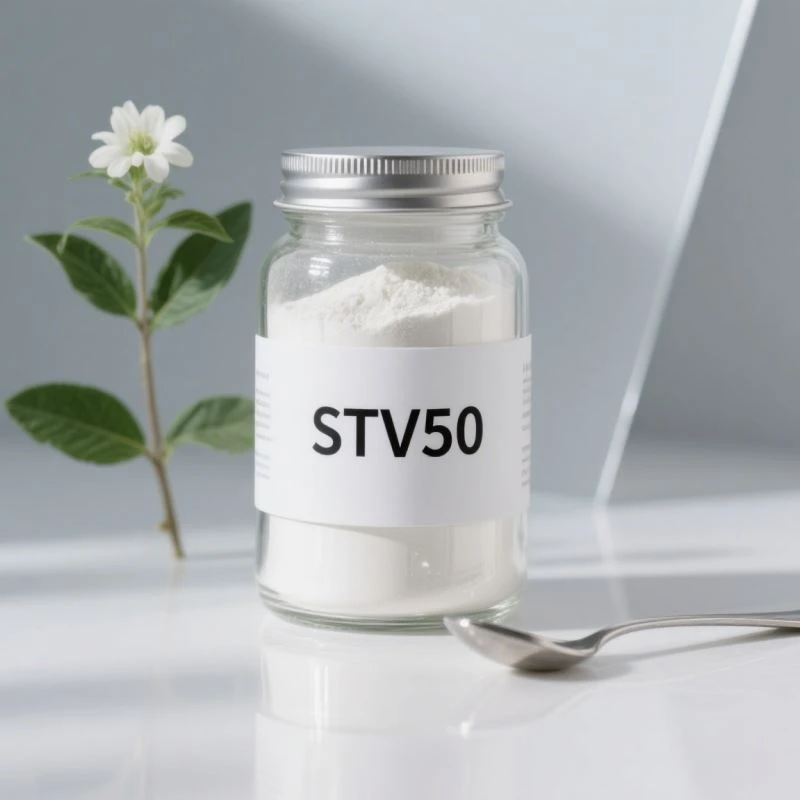
- Stevioside STV50: With a stevioside content of 50%, Stevioside STV50 offers a balance between cost and sweetness quality. Its sweetness intensity is higher than that of STV40 but lower than that of STV60. The after - taste is also less pronounced than in STV40 but may still be present to some extent.
- Stevioside STV80: This grade has a higher stevioside content (80%), resulting in a higher sweetness intensity and a cleaner sweetness profile with less after - taste. However, it is also more expensive than Stevioside STV60. Stevioside STV80 is often used in high - end products where a premium sweetness quality is required.
5. Applications in the Food and Beverage Industry
Stevioside STV60 has a wide range of applications in the food and beverage industry due to its unique sweetness characteristics.
- Beverages: It is commonly used in carbonated soft drinks, fruit juices, tea, and coffee. In carbonated beverages, it can replace a significant portion of sugar, reducing the calorie content while maintaining the sweet taste. In fruit juices, it can enhance the natural sweetness without adding extra calories. For tea and coffee, it provides a sweet option for consumers who prefer not to use sugar.
- Dairy Products: Stevioside STV60 can be used in yogurt, ice cream, and milkshakes. In yogurt, it can sweeten the product without increasing the sugar content, making it a healthier choice for consumers. In ice cream and milkshakes, it can create a rich and sweet flavor while reducing the calorie load.
- Baked Goods: Although the application of Stevioside STV60 in baked goods is more challenging due to its heat stability and the need to balance the sweetness profile, it can still be used in some products. For example, it can be used in low - sugar muffins or cookies to provide a sweet taste.
6. Conclusion and Call to Action
In conclusion, Stevioside STV60 offers a unique combination of high sweetness intensity and a distinct sweetness profile. Its ability to replace sugar in various food and beverage applications makes it an attractive option for manufacturers looking to meet the growing demand for low - calorie and sugar - free products. While it may have a slight after - taste, this can be effectively managed through proper formulation techniques.
If you are a food or beverage manufacturer interested in exploring the potential of Stevioside STV60 for your products, I encourage you to reach out to me. We can discuss your specific requirements, conduct taste tests, and develop customized solutions to meet your needs. Let's work together to create delicious and healthy products that will delight your consumers.

References
- Kinghorn, A. D., & Soejarto, D. D. (1985). Stevioside and related sweet diterpene glycosides from Stevia rebaudiana. In Progress in the chemistry of organic natural products (Vol. 47, pp. 157 - 216). Springer - Verlag.
- Geuns, J. - M. C. (2003). Stevia rebaudiana Bertoni, source of a high - potency natural sweetener: A comprehensive review. Critical Reviews in Plant Sciences, 22(4), 339 - 369.
- Purkayastha, R., & Shukla, S. (2014). Stevioside: A natural sweetener. International Journal of Green Pharmacy, 8(4), 274 - 278.


