


Hey there! I'm a supplier of Stevioside STV80, and today I wanna chat about how it stacks up against aspartame. Both of these are popular sweeteners, but they've got some pretty distinct differences.
Let's start with the basics. Aspartame has been around for ages. It's an artificial sweetener that hit the market in the 1980s. It's super sweet - like, about 180 - 220 times sweeter than regular sugar. That's why it's used in a ton of diet sodas, sugar - free gums, and other low - calorie products. People love it because it can give that sweet taste without all the calories of sugar.
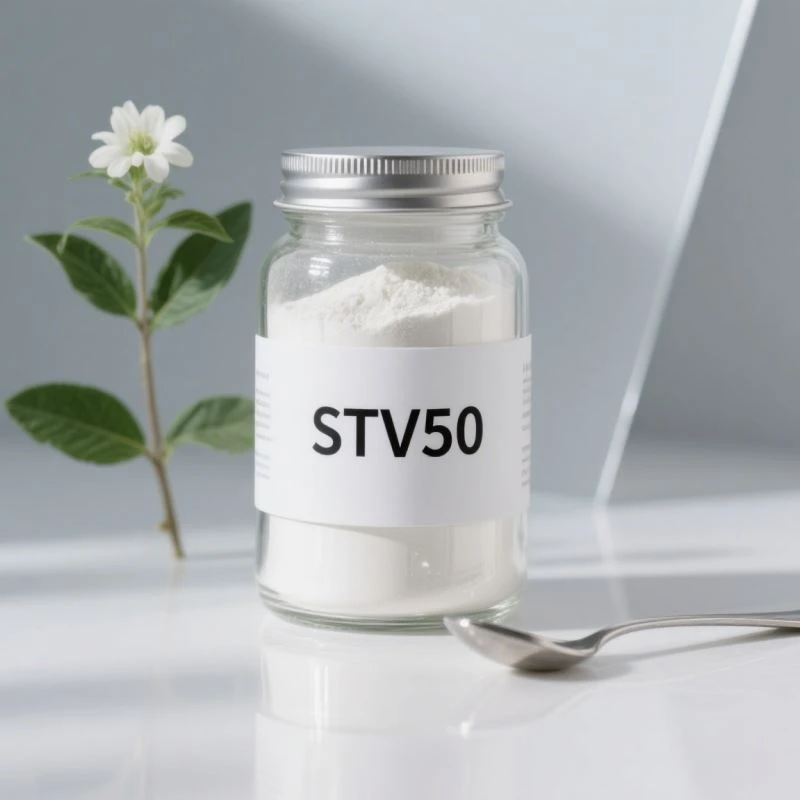
On the other hand, Stevioside STV80 is a natural sweetener. It's derived from the leaves of the stevia plant. The "STV80" part means it contains at least 80% stevioside. We also have Stevioside STV40, Stevioside STV60, and Stevioside STV50 in our product line, but STV80 is a real star. It's about 200 - 300 times sweeter than sugar, so it's right up there with aspartame in terms of sweetness.
One of the biggest differences between the two is the source. Aspartame is made through a chemical process. It's a combination of two amino acids, phenylalanine and aspartic acid, along with a methanol group. Now, the FDA has approved aspartame for use in the US, but there have been some concerns over the years. Some studies have linked aspartame to headaches, dizziness, and even potential long - term health risks like cancer. However, most of these studies have been debunked, and the scientific consensus is that aspartame is safe in moderate amounts. Still, it's a turn - off for some people who prefer natural ingredients.
Stevioside STV80, being natural, has a big advantage here. It comes straight from a plant, so it's a great option for those who are into clean - label products. There's a growing demand for natural sweeteners in the market, and stevia fits the bill perfectly. It's been used in South America and Asia for centuries, and modern research has shown that it's generally safe for consumption. It doesn't raise blood sugar levels, which is a huge plus for diabetics or anyone trying to manage their blood glucose.
Taste is another area where they differ. Aspartame has a pretty clean, sweet taste that's similar to sugar. But some people say it has a bit of a chemical aftertaste, especially when used in high concentrations. Stevioside STV80 has a unique taste profile. It's sweet, but it also has some licorice - like or minty undertones. Some people love this unique flavor, while others might need a bit of time to get used to it. However, with advancements in purification and blending techniques, we've been able to reduce the off - flavors of stevia and make it more palatable.
In terms of stability, aspartame is sensitive to heat and pH. When it's exposed to high temperatures or extreme pH levels, it can break down and lose its sweetness. This limits its use in some food and beverage applications, especially those that involve cooking or baking. Stevioside STV80, on the other hand, is more heat - stable. It can withstand higher temperatures without losing its sweetness, making it a great option for a wider range of products, from baked goods to hot beverages.

Let's talk about cost. Aspartame has been around for a long time, and it's mass - produced, so it's relatively inexpensive. This makes it a popular choice for large - scale food and beverage manufacturers who are looking to keep costs down. Stevioside STV80 is a bit more expensive. The stevia plant needs specific growing conditions, and the extraction and purification process is more complex. But as the demand for natural sweeteners grows, the cost of stevia is gradually coming down.
When it comes to environmental impact, Stevioside STV80 has the upper hand. The production of aspartame involves chemical processes that can generate waste and pollution. On the other hand, stevia is a renewable resource. The stevia plant can be grown sustainably, and the extraction process is relatively eco - friendly.
Now, let's look at the market trends. The demand for natural sweeteners is on the rise. Consumers are becoming more health - conscious and are looking for alternatives to artificial sweeteners. This is where Stevioside STV80 shines. It's a natural, zero - calorie sweetener that can be used in a wide variety of products, from soft drinks to dairy products.
If you're a food or beverage manufacturer, you're probably thinking about which one to choose. Well, it depends on your product, your target market, and your budget. If you're aiming for a low - cost, mass - market product and taste similarity to sugar is your top priority, aspartame might be a good option. But if you're looking to appeal to health - conscious consumers, want a natural ingredient, and need a sweetener that can handle high - temperature processing, then Stevioside STV80 is the way to go.
We've seen a lot of companies making the switch to stevia in recent years. Big brands are starting to use stevia - based sweeteners in their products to meet the changing consumer demands. And with our high - quality Stevioside STV80, you can be sure that you're getting a top - notch product.
If you're interested in learning more about Stevioside STV80 or are thinking about using it in your products, I'd love to have a chat. Just reach out, and we can discuss how it can fit into your production process and help you meet your business goals.
References:
- "Safety of Aspartame: A Review" - Journal of Toxicology and Environmental Health
- "Stevia: The Natural Sweetener" - Journal of Food Science and Technology
- "Consumer Preferences for Natural vs. Artificial Sweeteners" - Market Research Report


